

Huli Huli Beef Ribs on the Gas Grill
5 hrs · Intermediate · Feeds 4 · Cooked on a plain gas grill
Huli huli is Hawaii’s most famous fire glaze — born at a 1955 farm fundraiser where chicken was flipped between two grills until the shoyu-pineapple baste turned to dark lacquer. Huli means turn, and the glaze has been escaping onto every meat the islands grill ever since. On beef back ribs it goes somewhere chicken can’t follow: four hours of sweet kiawe smoke under a pineapple-shoyu shell.
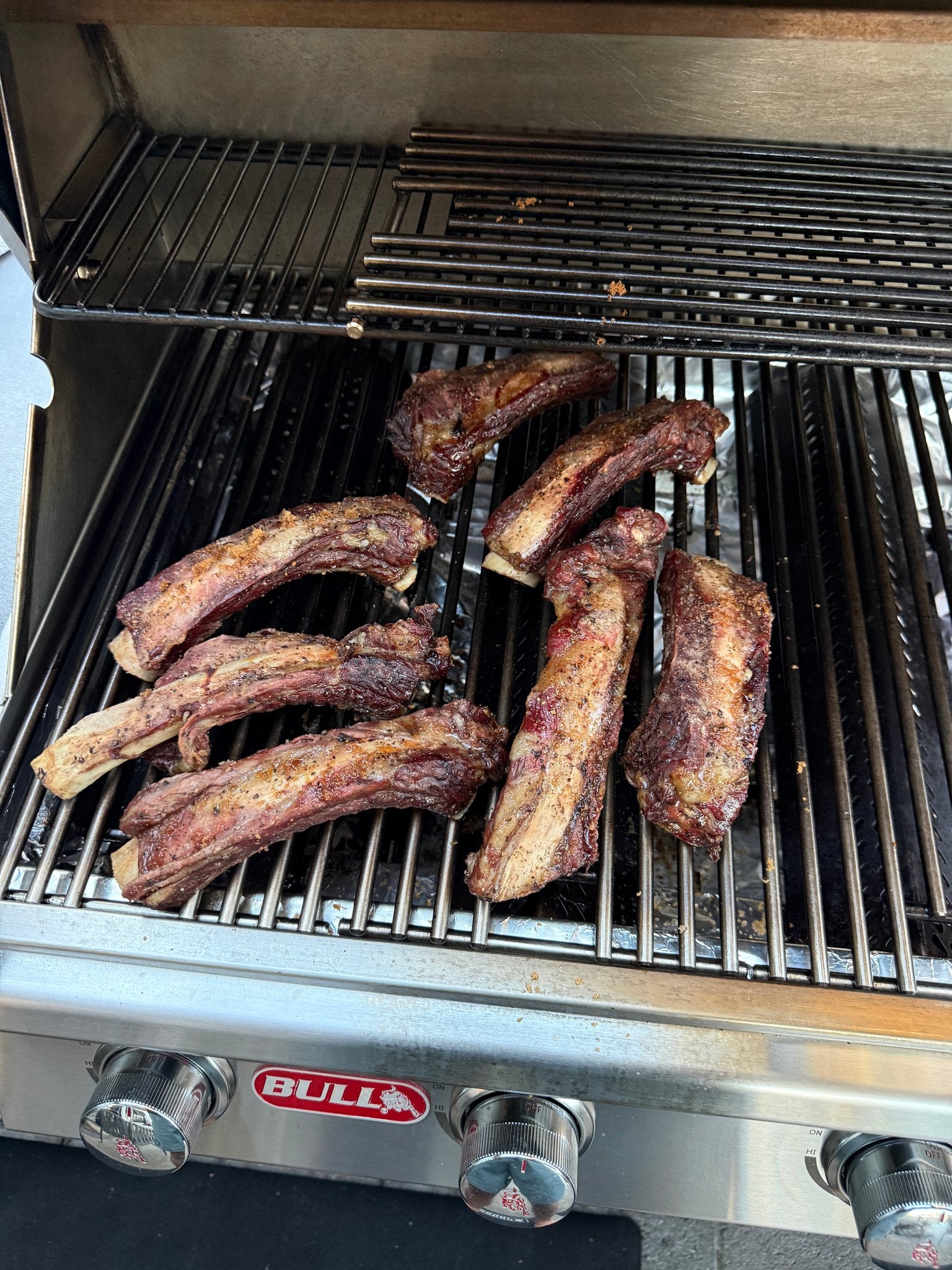
No smoker? Neither had this cook. Everything in these photos happened on a three-burner gas grill with kiawe chips in a foil pouch — the wood is the rig.
The Numbers
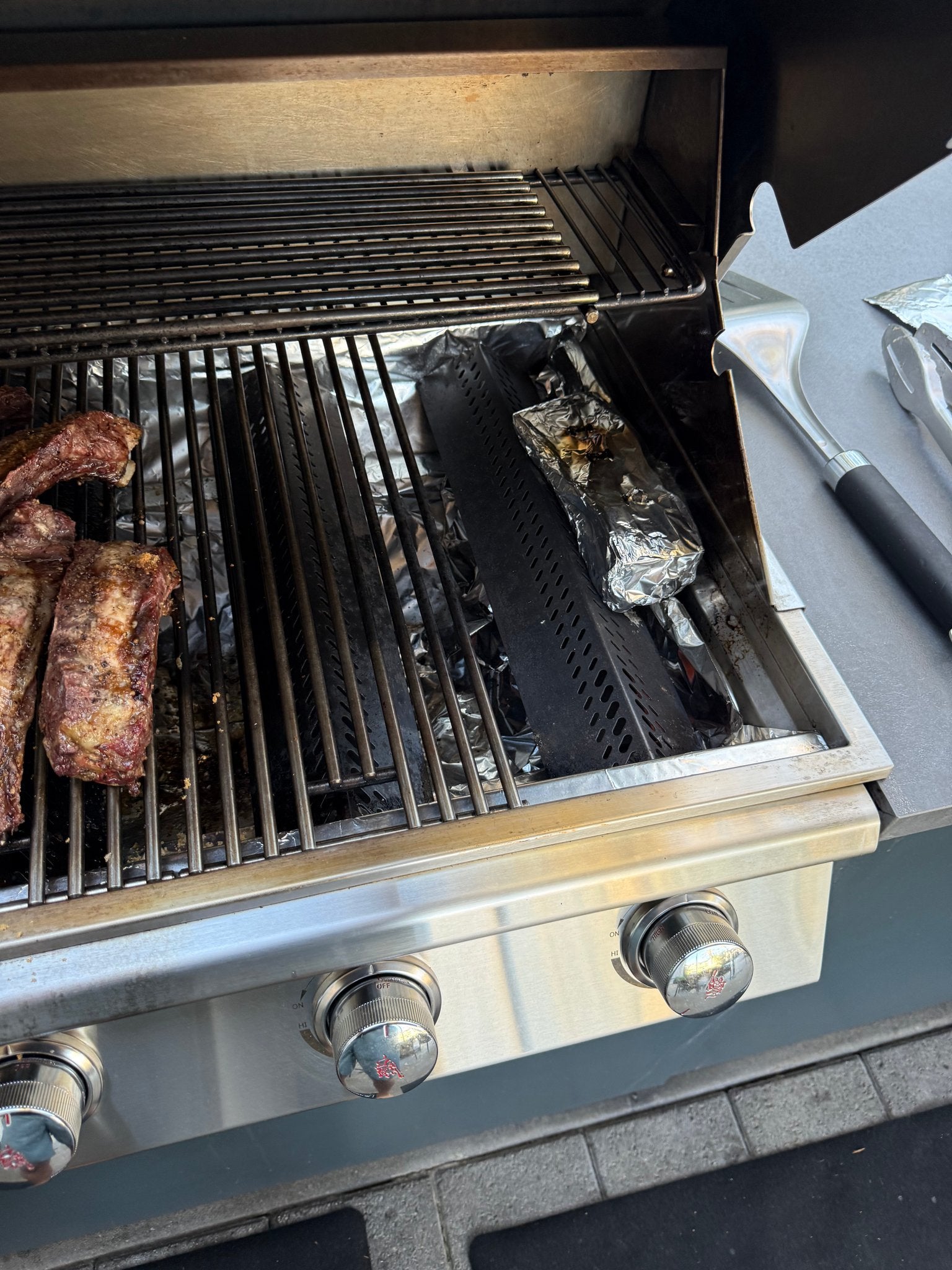
- Grill: 250–275°F, indirect — one burner lit, ribs on the far side
- Pull At: probe-tender between the bones, ~203°F
- Time: 4–5 hrs + 30 min of glaze
- Burn: kiawe chips in a foil pouch over the lit burner, refreshed hourly
Ingredients
- 2 racks beef back ribs, membrane removed
- Rub: 2 Tbsp coarse salt, 1 Tbsp cracked pepper, 2 tsp granulated garlic, 1 tsp ground ginger
- Huli huli glaze: 1/2 cup shoyu + 1/2 cup pineapple juice + 1/4 cup brown sugar + 1 Tbsp grated ginger + 2 Tbsp ketchup, reduced by half
Method
- Rub the racks at least an hour ahead — the night before if dinner is planned.
- Build the pouch: two big handfuls of kiawe chips in a double layer of foil, a few holes poked in the top. Set it directly over the one burner you leave lit.
- Ribs bone-side down on the unlit side. Hold 250–275°F with the lid closed, and drop in a fresh pouch every hour or whenever the smoke thins.
- Meanwhile, simmer the glaze down by half — it should coat a spoon.
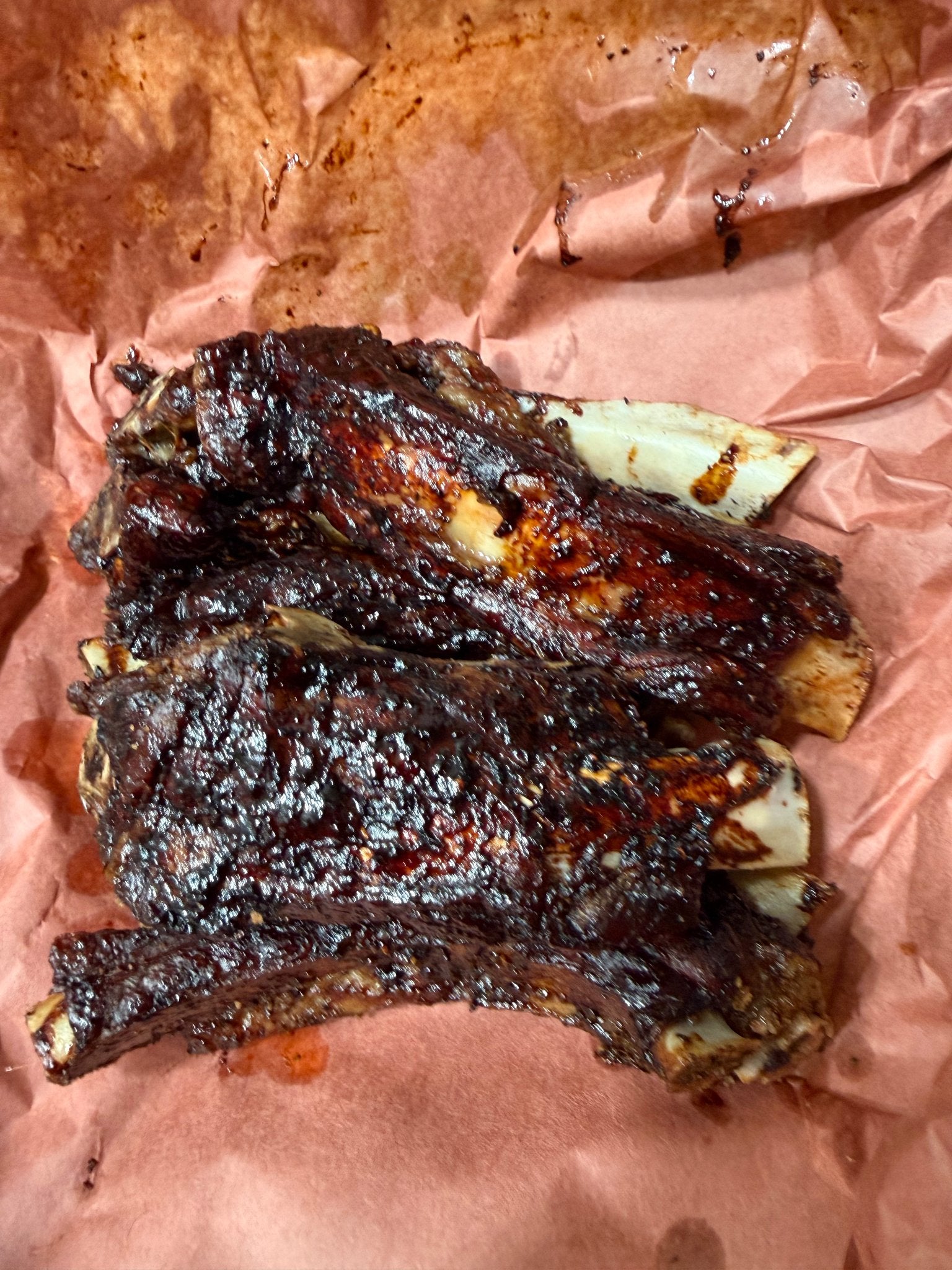
- At hour four, start probing. When the probe slides with just a little fight, paint the racks, close the lid 15 minutes, then turn and paint again — huli means turn — 15 more. Glaze only lives in the last half hour; sugar burns and patience doesn’t.
- Pull at probe-tender (~203°F), rest 10 minutes on butcher paper, slice into single bones.
On the Side
- Coconut Rice — sweet counterpoint to the smoke
- Hawaiian Mac Salad — the plate-lunch essential
- The Founder’s Pineapple Pico — built for the lobster, but rib meat in a tortilla won’t complain